





related: taxonomies 3, thermostats, highway, waiting room, esl, improvement era, fast sunday
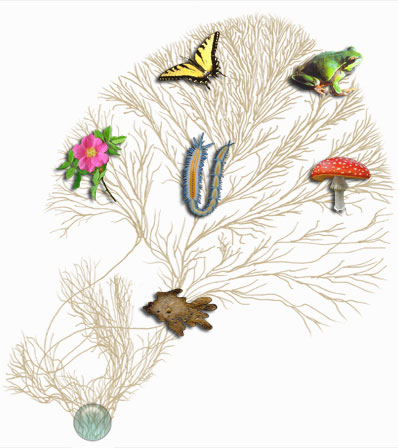
Earlier this year the International Botanical Society decided that in order to be officially recognized (by people) as a plant, you no longer have to wait two years to get a Latin name and description, and print publication. As of January 1st, an English name and description will now do fine, according to the new International Code of Botanical Nomenclature. This goes for fungus and algae too, and is mainly an effort to try to stay ahead of the mass extinctions we’ve been bringing about. A “dead” language is no longer quick enough to catch and hold these species for us.


just Richard Rolle’d my forty or so sophomore humanities students who were looking for the fourteenth-century English mystic, to do some last minute extra credit.
not cool for at least three reasons, I know.
Earlier this week researchers with the Royal Canadian Wildlife Service (RCWS) and the Alaska Department of Fish and Game submitted a joint report identifying an emergent genetic trait in certain polar bear populations. The report from their four-year study details instances of evolutionary mimicry among study samples, wherein “bears exhibited unique coloration traits” that can be described as “resembling U.S. legal tender.” As Tim Wheelbrow of RCWS explains, “the patterns were most clearly distinguishable in the spring, as the adults completed their molting. We noted these in certain localized populations, and the resemblance to currency mainly consisted of the smaller bills, ones and fives primarily.”

The biological record includes many cases of mimicry in different species of insects, flowers, crustaceans, snakes and birds. But such adaptations tend to mimic what another species, typically a predator species, most fears or wants to avoid. The joint study suggests that this particular case may be unique in that the adaptation seems to be mimicking what another species most loves, or may seek to protect. Between transcontinental oil pipelines and Coca-Cola greenwashing campaigns, 21st century “dolar bear” populations appear simply to be responding to environmental and market indicators in a bid for survival.
So far, the documented effects of the adaptation have been limited to fur coloration, but the study does mention outside reports of bear scat consisting of gold, kerogen, and, in some cases, iphone apps (unlicensed, of course). Although the study itself offers little speculation as to the future of this adaptation in these bears, Wheelbrow has noted anecdotal evidence of coloration patterns resembling larger bills ($50, $100, $500, etc.) in younger bear cubs. If this tend continues, Wheelbrow observes off the record, “we can expect what we might call a ‘Franklin,’ ‘McKinley,’ or even a ‘Cleveland generation’ of the bears before too long.”
Associated Press


